
Typical new garage door prices in the UK (2026 ranges)
Typical supply-only prices for a new garage door in the UK in 2026 often sit between £700 and £2,500, with installation commonly adding £250 to £900 depending on access, removal of the old door, and any structural preparation. Up-and-over doors usually start at the lower end of the range, while sectional and roller doors tend to cost more due to their guided tracks, tighter sealing, and compact operation. Material choice also shifts the budget: steel often offers the best value, whereas timber can cost more because of finishing and ongoing maintenance needs. Colour finishes, glazing panels, and bespoke sizing can also raise costs.
Expect higher prices when you specify insulation, stronger security features, or automation. A basic electric opener can add around £300 to £900, while integrated roller door motors may cost more when paired with safety edges and remote controls. Regional labour rates and site conditions also influence the final figure, so a local survey helps confirm what the opening can accept and whether the frame needs adjustment. For local options and examples of common door types, see Garage Doors Norfolk.
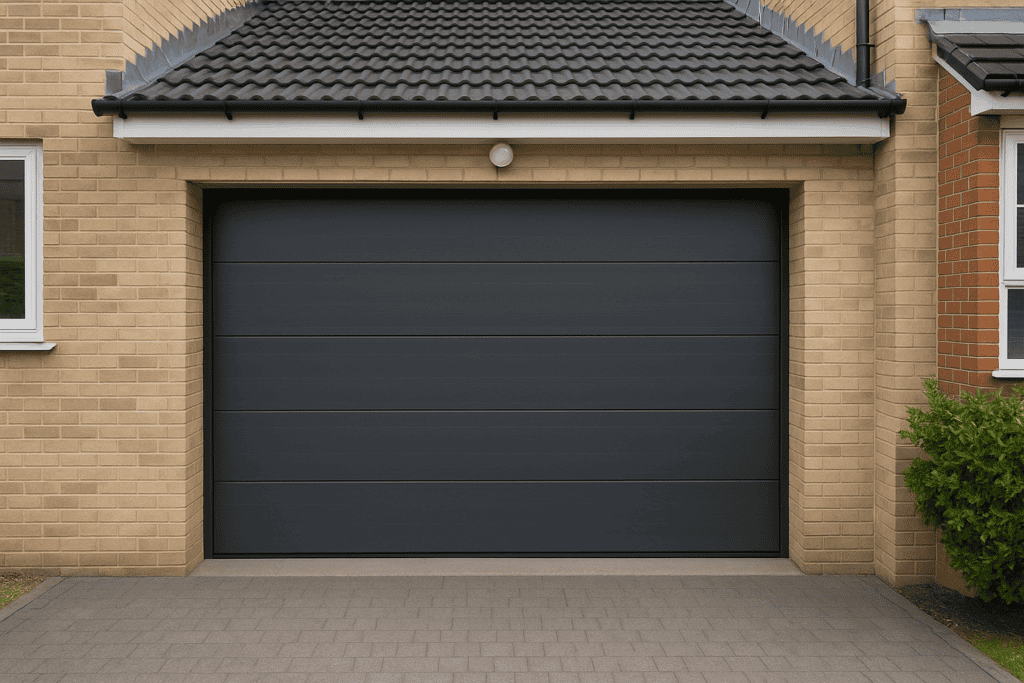
Garage door types and how each affects cost
Door type often sets the baseline price because it dictates the mechanism, the amount of hardware, and the time needed to fit and set up the door. Space around the opening also matters, as some designs need headroom (space above the opening) or side room for tracks and guides.
Up-and-over doors usually cost less because the design uses a simple pivoting action and fewer components. Many homes suit this style, yet the door swings out as it opens, which can limit driveway clearance. A canopy version often uses fewer tracks than a retractable version, so the hardware cost can differ even within the same type.
Sectional doors tend to cost more because several hinged panels run on guided tracks and sit under the ceiling when open. That track system improves stability and can support stronger seals, which helps reduce draughts and water ingress. Sectional designs also suit shorter driveways because the door does not swing outwards.
Roller doors often sit in a similar or higher bracket than sectional doors. The curtain rolls into a box above the opening, which saves ceiling space and suits garages used for storage. Many roller doors use an electric motor as standard, so the price commonly reflects the inclusion of controls, safety features, and commissioning.
Side-hinged doors can vary widely in cost. A basic steel pair can remain competitive, while insulated composite or timber options can rise quickly due to material and finishing. This type suits garages used as workshops because it allows partial opening without lifting the full door.
Electric operation can raise the cost across all types, particularly when the installer needs extra wiring, safety edges, or remote systems. For safety expectations and good practice, follow guidance from DHF (Door & Hardware Federation) and product information from established manufacturers such as Hörmann.
Materials and finishes: price differences and durability
Material choice often drives both the upfront price and the service life of a new garage door. Steel doors usually offer the best value, with galvanised skins and factory coatings that resist dents and corrosion. Insulated steel panels cost more than single-skin options, yet insulation can reduce draughts and noise and may suit integral garages.
Timber doors tend to sit at a higher price point because joinery and finishing take time. Softwood options can reduce cost, although they need regular painting or staining to prevent swelling and rot. Hardwood can last longer, yet the extra weight may require stronger springs and hardware, which can raise fitting costs.
Aluminium often costs more than steel, although it resists rust and suits wider openings due to its low weight. Many aluminium doors use powder coating for a consistent finish. Composite doors, which combine materials for strength and stability, can command premium prices but often need less upkeep than timber.
Finishes also affect durability. Powder coating and plastisol coatings usually outlast basic paint systems, while woodgrain effects can add cost without the maintenance of real timber. For guidance on protective coatings and corrosion resistance, see Galvanizers Association.
Size, insulation, and security features that change the quote
Size often changes a quote more than homeowners expect. A standard single opening usually costs less because manufacturers produce common dimensions in higher volumes. By contrast, a wide double door, an oversized opening, or a non-standard height can require made-to-measure panels, stronger springs, and extra bracing, which raises both supply and fitting costs. If the opening needs adjustment, such as new timber framing or a replacement lintel, labour and materials can increase the total.
Insulation also shifts pricing. Insulated doors use double-skin panels with a foam core, which improves thermal performance and reduces rattles. That upgrade suits integral garages or rooms above the garage, yet it adds weight and can require upgraded hardware. For context on insulation performance, the British Standards Institution (BSI) provides guidance on product standards and testing.
Security features can add cost in a targeted way. Multi-point locking, anti-lift devices on roller doors, and reinforced bottom rails can deter forced entry. If a door includes automation, a compliant safety edge and obstacle detection often form part of the specification. Some insurers also expect a recognised security rating, so it can help to check requirements before choosing upgrades.
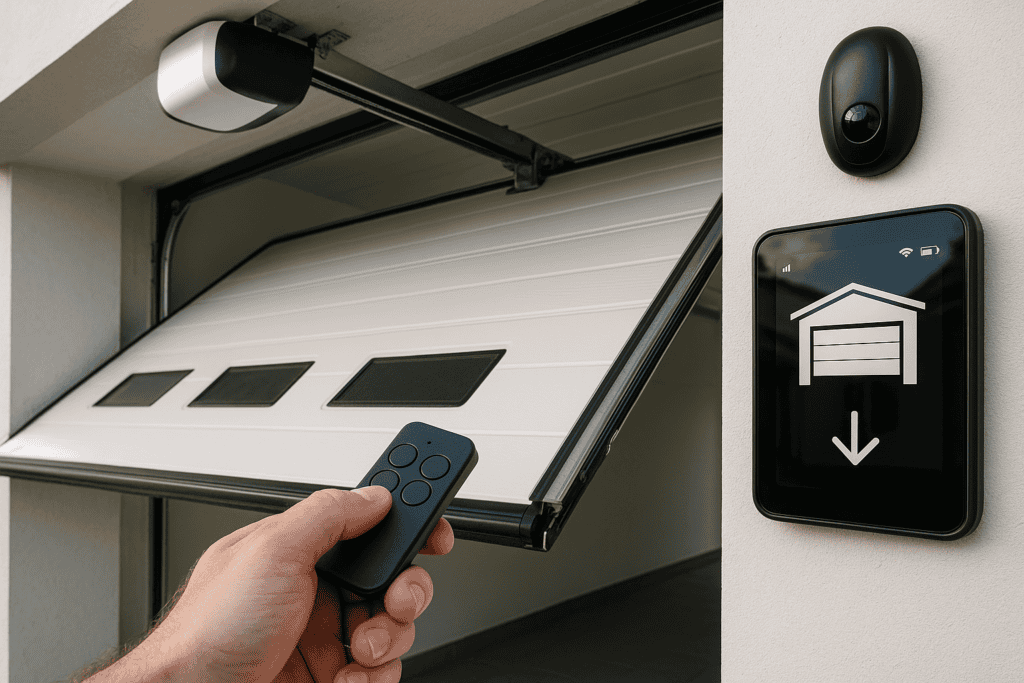
Automation and smart controls: expected extra costs
Automation can add convenience and improve security, yet it increases the quote through extra parts, electrical work, and set-up time. Costs vary most with door type, motor strength, and the control features selected.
- Basic electric opener (supply and fit): often £350 to £900 for compatible doors, including standard wall button and two remotes.
- Integrated automation for roller or sectional doors: commonly £500 to £1,200, as the motor, controls, and safety systems form part of the door package.
- Mains power to the garage: typically £150 to £450 if a qualified electrician needs to add a fused spur, cable run, or consumer unit protection.
- Battery back-up: usually £80 to £250, useful where power cuts would trap a vehicle inside.
- Smart controls and app access: often £50 to £250, depending on whether the system uses a simple Wi-Fi module or a branded hub.
Smart features often include phone notifications, timed closing, and user access control. Some systems also support voice assistants and home automation platforms. Compatibility matters, so installers may recommend a matched ecosystem rather than a universal add-on. For example, Somfy and Hörmann offer integrated controls on selected door ranges, which can reduce wiring complexity and improve reliability.
Safety equipment can also affect the price. Most automated doors need obstacle detection, and many installers fit photoelectric safety beams as an extra safeguard. Expect £60 to £180 for beams if they are not included. Keypads and external switches usually add £40 to £150, while extra remotes often cost £20 to £60 each.
Ask for a written breakdown that separates the motor kit, electrical works, and smart modules. That approach makes it easier to compare quotes and avoid paying twice for the same feature.
Installation, removal, and disposal: labour costs explained
Labour charges for a garage door usually cover more than fitting the new door. Installers price for safe removal, preparation of the opening, accurate alignment, and final testing. As a guide, many UK quotes include labour in the £250 to £900 range, yet the figure can rise when access proves difficult or the opening needs remedial work.
Removal and disposal often sit as a separate line item. Older doors can weigh a great deal, and some frames need careful dismantling to avoid damage to brickwork or render. Disposal costs vary by area and by material. Local rules also affect pricing, since tradespeople must use licensed waste facilities. Guidance on household waste and recycling sits on the GOV.UK website.
- Removal of the existing door and frame: time increases if fixings have corroded or the frame has warped.
- Making good the opening: minor timber packers and sealant often sit within the labour price; repairs to lintels, reveals, or subframes usually cost extra.
- Fitting and balancing: installers set spring tension and check smooth travel to reduce strain on parts.
- Weather sealing: new side and bottom seals can improve draught control, yet uneven floors may need extra trimming or threshold work.
- Commissioning and safety checks: powered doors need force settings, obstacle detection tests, and handover of manual release operation.
Electrical work can also affect labour costs. If a new fused spur, cable run, or socket is required, a qualified electrician may need to attend. Installers often recommend this step for compliance and safety, and consumers can verify competent electricians through schemes such as NICEIC.
To avoid surprises, ask for a written breakdown that separates fitting, removal, disposal, and any building or electrical extras. Clear itemisation makes it easier to compare like-for-like quotes.
Regional pricing and access constraints that influence fitting charges
Fitting charges vary across the UK because labour rates, travel time, and local operating costs differ by area. London and much of the South East often attract higher day rates, while many parts of the Midlands, Wales, and the North of England can price more competitively. Even within the same region, installers may adjust quotes for parking restrictions, congestion charges, or limited loading access, since these factors extend time on site.
Access constraints at the property can also raise labour costs. A narrow driveway, steps to the garage, or a long carry from the van to the opening can slow handling of heavy panels and tracks. Restricted headroom or tight side room may force more on-site adjustment, which increases fitting time. Some homes also need work at height to set torsion springs safely, so installers may include the cost of extra equipment or a second fitter.
Where the garage sits on a shared lane or behind a rear garden, installers may schedule longer time slots to manage deliveries and safe working space. For guidance on safe installation and compliance, many fitters follow standards referenced by DHF (Door & Hardware Federation).
How to compare quotes and avoid hidden costs
Ask each installer to quote on the same specification, including door type, finish, insulation level, security rating, and automation. Request a written breakdown that separates supply, fitting, removal, and any electrical work. A like-for-like comparison becomes difficult when one quote includes disposal or new fixings and another leaves those items out.
Check what the price assumes about the opening. Confirm whether the quote includes minor timber repairs, new sub-frame, new lintel trim, or levelling of the floor threshold. If the installer expects sound brickwork and square reveals, ask what happens if the survey finds movement or rot. Clarify whether the price includes making good, such as sealing gaps, fitting brush strips, and reattaching trims.
Warranties and aftercare can shift value. Ask who provides the product warranty and who covers labour if a fault occurs. For automated doors, confirm compliance with UK safety expectations and ask for documentation aligned with HSE guidance on work equipment safety. Before accepting, confirm VAT status, payment terms, lead times, and whether call-out charges apply during the warranty period.
FAQ
Do I need planning permission for a new garage door? Most replacements count as permitted development, so you usually do not need planning permission. Restrictions can apply to listed buildings and some conservation areas. Check with your local council if you are unsure.
How long should installation take? Many straightforward replacements take half a day to a full day. Complex jobs can take longer when the opening needs repairs, the electrics need updating, or access limits safe handling.
What warranty should I expect? Warranties vary by door type and parts. Ask for separate cover periods for the door curtain or panels, the motor, and consumables such as remote batteries. Request written terms and keep proof of servicing if the warranty requires it.
Can I keep my existing opener? Some openers work with a new door, yet compatibility depends on door weight, balance, and fixing points. A competent installer should confirm suitability and safety before reuse.
How can I check security claims? Look for third-party testing and clear product documentation. For guidance on physical security and standards, see Secured by Design.