
Garage floor tiles are usually better for DIY installation, while epoxy often delivers a more seamless finish but demands stricter surface preparation and ongoing care. The best choice depends on how much time, skill, and maintenance the floor will require after installation. This article compares installation difficulty, cost, durability, cleaning needs, repair methods, and long-term performance. It also explains where each option works best in home garages with different levels of traffic, moisture, and chemical exposure.
Key takeaways
- Choose interlocking tiles for the quickest DIY install and the least slab preparation.
- Epoxy needs clean, dry, porous concrete, often plus grinding, etching or crack repairs.
- Tiles suit older slabs better because they tolerate hairline cracks, patch marks and slight unevenness.
- Epoxy resists oil, brake fluid and road salt, but bond failure can cause peeling.
- Interlocking tiles spread tyre loads and handle moisture and temperature movement without relying on adhesion.
- For long-term maintenance, tiles are easier to clean, lift, replace and match to use.
DIY Installation: How Garage Floor Tiles and Epoxy Differ in Prep, Tools and Time
Choose interlocking tiles for the fastest DIY install and the least surface prep. Most systems only need a clean, dry, reasonably level slab, so you can sweep, degrease and start laying panels the same day. Epoxy needs more work first. Concrete must be clean, dry, sound and porous enough to bond, which often means grinding, acid etching or crack repairs.
The tool list shows the gap. Tiles need basic measuring and cutting tools, plus a rubber mallet to lock sections together around edges and posts. Epoxy often needs a grinder or etching product, a mixing drill, rollers, brushes and spiked shoes. Timing is tighter too, since each coat has a set working and curing time.
| Factor | Interlocking tiles | Epoxy |
|---|---|---|
| Surface prep | Usually needs a clean, dry, reasonably level slab | Needs clean, dry, sound, porous concrete and often grinding, etching or crack repairs |
| Tools | Basic measuring and cutting tools plus a rubber mallet | Often needs a grinder or etching product, mixing drill, rollers, brushes and spiked shoes |
| Timing | Can often be started the same day and staged more easily over a weekend | Each coat has a set working and curing time |
| DIY difficulty | Easier to correct if a row slips out of line | Rushed prep or mixing can cause peeling, bubbles or weak adhesion |
For long weekend projects, tiles are easier to stage and fix if a row slips out of line. Epoxy gives a seamless finish, but moisture, poor prep or rushed mixing can cause peeling, bubbles or weak adhesion that is hard to repair later.
Surface Preparation and Subfloor Requirements That Affect Results
Bond failure, lifting edges and trapped moisture usually trace back to the slab, not the finish. For older garage floors with minor cracks, slight unevenness or uncertain moisture levels, interlocking tiles are the safer choice because they tolerate defects that would shorten an epoxy coating’s life.
Tiles sit on the concrete rather than bonding into it, so they handle hairline cracks, patch marks and slight slab movement better. The floor still needs to be clean and fairly flat, but not as dry or finely prepared. Results are often more predictable where concrete has aged, absorbed oil or lacks a reliable damp-proof barrier.
Epoxy gives the stronger finish only when the concrete is dry, sound and properly prepared. The Portland Cement Association notes that concrete keeps curing after placement, and coatings applied too soon or over damp slabs can fail early. Use epoxy only after curing, crack repairs and proper moisture testing. On rough or moisture-sensitive floors, tiles usually cause fewer long-term problems.
Durability Under Tyres, Chemicals, Moisture and Temperature Changes
- Load spreads through the tile rather than relying on bond strength alone
- Handles slight floor movement better
- Can let small amounts of moisture dissipate below the surface
- Often keeps its appearance longer on damp slabs or under frequent tyre traffic
- Still sits on top of the concrete, so bond failure matters
- Hot tyres, slab vapour and seasonal movement can cause peeling or blistering
- Worn traffic lanes can show over time
- Best suited to dry, stable concrete with tight chemical and cleaning control
Do not judge durability by hardness alone. In garages, heat, moisture and tyre load often stress the floor together. A well-bonded epoxy film resists oil, brake fluid and road salt, but still sits on top of concrete. Hot tyres, slab vapour and seasonal movement can break that bond, causing peeling, blistering or worn traffic lanes.
Interlocking tiles handle those stresses differently. Load spreads through the tile, and the floor can move slightly without losing adhesion. Polypropylene tiles also let small amounts of moisture dissipate below the surface. For damp slabs, freeze-thaw swings or frequent tyre traffic, tiles often keep their appearance longer. Epoxy suits dry, stable concrete with tight chemical and cleaning control.
Long-Term Maintenance: Cleaning, Repairs and Replacement Costs
For low-effort upkeep, interlocking tiles are often easier to manage long term. Dirt stays on the surface, damaged sections lift out, and replacements rarely disturb the rest of the floor. Epoxy can look cleaner day to day, but chips, stains and peeling often leave visible repairs and may require wider recoating.
Clean both surfaces with a soft broom and a pH-neutral cleaner. Keep spare tile packs from the same batch for a close match. For epoxy, wipe oil quickly, avoid acid cleaners and patch defects early. For a seamless, heavy-duty finish, Industrial Epoxy Flooring is a better reference than light DIY kits.
Wrong cleaning methods cause most long-term problems. Steam, standing water under tiles, metal shovels and strong solvent degreasers can shorten the life of both surfaces. Check joints, edges and drains twice a year and fix local damage early.
Which Garage Flooring Suits Your Use, Budget and Skill Level Best
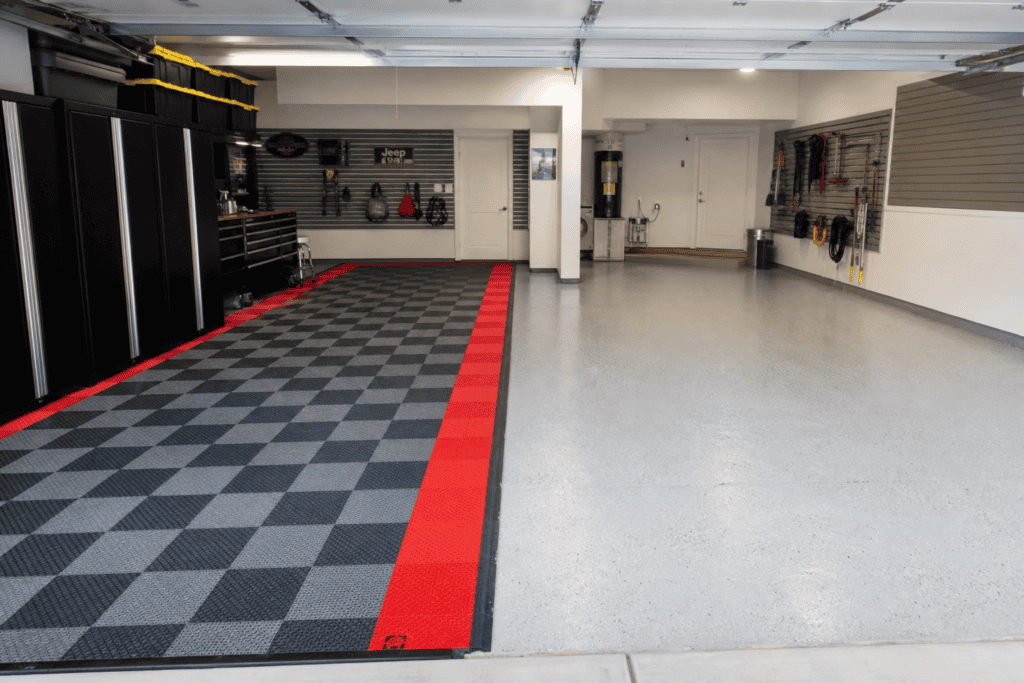
Installation errors, early wear and repair costs drop when flooring matches the garage’s real use. For most DIY projects, interlocking tiles suit the widest range of budgets and skill levels. They need less prep, hide minor slab flaws and allow simple section replacement, which suits garages used for parking, storage and bench work.
Epoxy suits owners who want a seamless finish and can manage moisture, surface condition and application carefully. It makes more sense where appearance matters more than quick repairs. Budget for future work as well as the first install, especially beside planned upgrades such as Replacement Garage Doors or wider property improvements handled by Commercial Flooring Contractors.
If speed, fault tolerance and easy upkeep matter most, tiles are the safer choice. If a continuous coated look matters more, epoxy can justify the extra effort.